Every Mac since 2022 ships a pair of daemons to build a graph about you
#technology
8185 posts · Last used 7m

TSMC is apparently considering getting into the RAM business at the request of Nvidia.

The Enough Phone is made by and for people fed up with big screens

It Turns Out Binance's $6 Billion Hack Happened Because Its Employees Were Vibe Coding

Fiber Optic and Photonics-Based AI Acceleration
SIGNAL FLOW (BIDIRECTIONAL, 4-PORT):
PC →
4 x QLE2660 HBA 16G FC PCIe ISP2722 Single-Port (in 14.025G mode; 2 forward + 2 reverse) →
FC Frame (Port 0: Wpos phase, Port 1: Wneg phase — R4, 2 forward cards) →
2 x FTLF8529P4BCV 16G FC SFP+ 850nm MM (FORWARD) →
2 x 2 MM FBT Fiber Couplers (two 1x2 units, 4 outputs total) [Group A: VCSEL-1 P1+P2, Group B: VCSEL-2 P1+P2] →
2 x 6457567-4 or A14037-000 LC Duplex Adapters (Blue, Ceramic Sleeve, with SM05LC external threads) →
Into S05LM56 socket →
2 x S5973 PIN Detectors (R4: dual parallel chains) →
2 x TLV3501 Comparators [threshold 0.15V] → (3.3V) → Level Shifter (1.8V) → 100nF AC →
DS250DF410ABMR IN0_P/N, IN1_P/N →
DS250DF410ABMR OUT0_P/N, OUT1_P/N → 100nF AC →
OM4 LC-LC →
2 x FTLF8529P4BCV 16G FC SFP+ 850nm MM (REVERSE) →
2 x QLE2660 HBA 16G FC PCIe ISP2722 Single Port (in 14.025G mode, 2 cards for the return path) →
PC
DESCRIPTION:
Since the QLE2660 is a single-port device, 4 cards are required to provide the necessary 4 ports. The previous assumption of 2x QLE2660 cards was based on a dual-port configuration; with the correction for single-port units, this has been updated to 4x QLE2660 cards.
Forward path: QLE2660 #1 and #2 (2 ports) -> 2x FTLF8529P4BCV (forward) -> 2x2 FBT
Return path: TLV3501 -> DS250DF410ABMR -> 2x FTLF8529P4BCV (return) -> QLE2660 #3 and #4 (2 ports) -> PC
CALCULATION:
Line rate per port is 14.025 Gbps; after 64b/66b encoding, the net rate is ~13.6 Gbps/port. With 4 cards, the total line rate is 56.1 Gbps, and the total data rate is ~54.4 Gbps. The forward path (2 ports) provides ~27.2 Gbps of data. A 67.19 MB file (537.5 Mbit) results in a forward transfer time of ~19.7 ms. LCM (Liquid Crystal Modulator) 4-step process takes ~80 ms. Optical VMM latency is in the ns range; TIA+TLV3501 latency is ~4.5 ns; the DS250DF410ABMR retimer latency is <100 ps; and the return path takes ~19.7 ms. Total time (optical + digital overhead) is <1–2 seconds, resulting in visual generation within a maximum of 3 seconds. BILL OF MATERIALS FINAL V4 (CURRENT):
4 x QLE2660 HBA 16G FC PCIe ISP2722 Single Port (in 14.025G mode) – 2 forward + 2 reverse
4 x FTLF8529P4BCV 16G FC SFP+ 850nm MM – 2 forward + 2 reverse
2 x 1x2 MM 50/125 3mm FBT FO Coupler 50/50 850nm (orange, without connectors) (2x2, 4 outputs total)
2 x 6457567-4 or A14037-000 LC Duplex Adapter with Blue Ceramic Sleeve (each with 2 LC ports, 4 LC ports total = 2x2 couplers)
2 x S05LM56 mount + 2 x SM05LC external-thread adapter
2 x S5973 PIN Photodiode + 2 x OPA858IDSGR TIA (Rf=1k, Cf=0.15pF)
2 x TLV3501 Comparator (threshold 0.15V)
1 x DS250DF410ABMR Retimer 25.8G 101-FCCSP 4-channel (2 channels active)
NOTES:
6457567-4 is obsolete; use A14037-000 instead. Only 2 units of either are required.
For the FBT coupler, do not use the yellow SM (single-mode) DWBC-1X2 type; use the orange MM (multimode) 50/50 850nm FBT coupler. - The DS125DF410 has a maximum capacity of 12.5G and therefore cannot operate at 16G; the DS250DF410ABMR supports 20.2752–25.8G (plus sub-rates) and is suitable for 14.025G, eliminating the need to downshift to 8G.
The DS90UB953, being a 4.16G FPD-Link device, was incompatible with 16G FC; it has been replaced with the DS250DF410ABMR.
This 4-port configuration meets the target of reducing the duration from 3 minutes (180 seconds) to a maximum of 3 seconds (~60x acceleration).
DOI for project files
doi.org/10.5281/zenodo.23930740


Fearing AI disruption, white-collar workers are quitting their jobs



Boosted by @Dragofix@veganism.social
#News: #Australia invests in an alternative to dirty #palmoil from #rainforests. 🇦🇺🔬 Biotech startup #Levur receives $250k government grant to use precision fermentation to create alternative to #palmoil for #cosmetics and #food. Fund #technology to end #deforestation! 🛑🌳 #BoycottPalmOil #Boycott4Wildlife @palmoildetectives@mastodonapp.uk
Protesters break into Microsoft data center site in Amsterdam - Europe is witnessing a wave of protests against data centers.
cross-posted from: reddthat.com/post/76163261
Reuters reports that around 100 people made it into the construction site, with some scaling a crane to place a “fuck AI” banner. Protesters also unfurled a “Microsoft powers genocide” banner on the construction site, and chanted “Microsoft has got to go” and “free Palestine.”


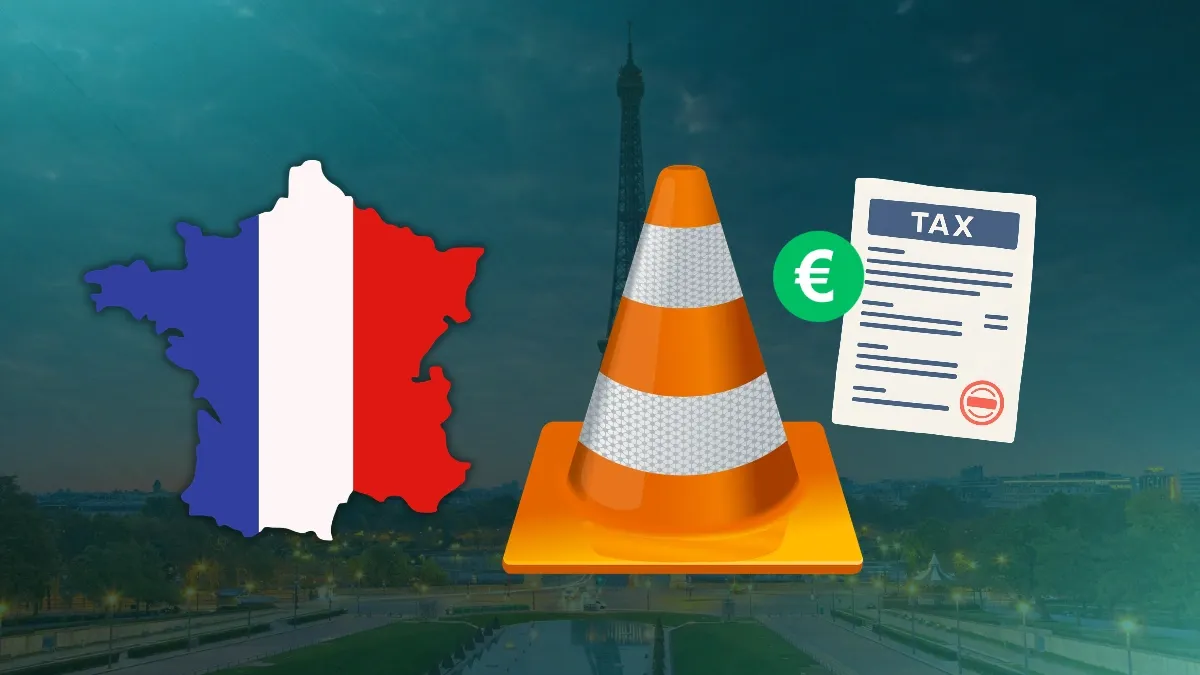
France’s Weird Per-Gigabyte Data Tax Could Cost VLC Over €1 Million a Year!
cross-posted from: lemmy.ml/post/54833264
At least that’s what VLC thinks when protesting the new French law.
France’s National Assembly has voted in favour of a new “internet tax” that would charge companies for every gigabyte of data they send to users in France.
The idea is to make Netflix, Google, Meta and the rest of Big Tech pay more.
That sounds like a dream come true for many of us who prefer taking ownership of data in our own hands but unfortunately things are not that simple.
The way this law is written, it doesn’t stop at Big Tech. Even VLC, a free and open source media player maintained by a non-profit, could end up paying this new tax.
What the new French internet tax says
New French Internet Tax law
The measure is amendment I-1358 to France’s 2027 finance bill, tabled by Laurent Lhardit. It creates a tax on “producers of digital data” at €0.055 (5.5 euro cents) for every gigabyte delivered to subscribers of French internet providers.
Internet providers would measure how much data each sender pushes to their customers, with the collection supervised by telecom regulator Arcep and the tax administration DGFiP. Only the volume is counted, not the content or where it goes.
The amount is capped at 15% of the company’s revenue in France or 2% of its total revenue, as per the amendment. Note that it’s 15% of French revenue, not of total network traffic. And the text joins the two caps with an “or” without saying which one applies when they differ.
How much money are we talking about?
The amendment cites an Arcep estimate of 200 billion GB a year flowing to French internet subscribers. It expects the tax to bring in €10 billion a year. It also names Google, Meta (Facebook, Instagram), Amazon, Netflix and Akamai (cloud server provider) as the senders of about half of that traffic.
You’d think the money goes to the telecom operators who build and maintain the networks. That’s the “fair share” argument European telcos have pushed for years.
But that’s not the case. The revenue goes straight into the state budget, and the amendment’s own justification talks about tax fairness between local businesses and digital multinationals, plus the ecological benefit of compressing data.
Why VLC is angry
A gigabyte of open source software counts the same as a gigabyte of Netflix. VideoLAN, the French non-profit behind VLC, posted on X that the tax would cost it over €1 million a year.
Lhardit replied that the cap would protect VideoLAN. He also said he didn’t see how the tax could be passed on to users of Facebook, Instagram or TikTok since those services are free.
VideoLAN didn’t take that well:
You have no idea what you are talking about. What you said about Facebook and Insta and other social networks are not targeted because they are free, means you don't understand the basics of economy. You don't understand the difference between Revenue and Profit.
VideoLAN (@videolan), October 30, 2026
The cap may limit what a low-revenue non-profit owes. But there is no explicit exemption for associations, free software or free content anywhere in the text. VideoLAN’s €1 million is the possible figure before the cap, and right now nobody can tell the exact figure for certain because of all the ambiguity.
VLC isn’t alone. OVHcloud founder Octave Klaba put his company’s gross exposure at around €70 million a year, and Free’s (Teleccom) Xavier Niel called the authors “ignares incompétents”, roughly “incompetent ignoramuses”. Those are French companies, by the way. Not exactly the US giants this internet tax bill was meant to tame.
At the end, the consumer pays the bill
See, a “war on Big Tech” sounds great in a headline, and European governments are fond of laws that squeeze extra money out of American tech companies. But I don’t buy the idea that Netflix will pay them out of their pocket.
Netflix will do what it always does and raise subscription prices. And Facebook is “free” only because advertisers pay for it, which is exactly the revenue versus profit point VideoLAN was making.
So the government gets extra money, Big Tech protects its margins, and you end up paying. Meanwhile, non-profit projects like VLC, which never had a price to raise in the first place, are left wondering how big their bill will be.
Let’s just hope that this doesn’t take the form of law. Because this will set a precedence. I wouldn’t be surprised to see other European countries try their own version. No government will say no to extra tax revenue.
Like GDPR, this has all the ingredients of another mess. If a law is going to tax “internet companies”, it needs to say in black and white which ones. Right now, it doesn’t.
What do you think? A fair way to make Big Tech pay, or a blunt instrument that hits everyone else? Let me know in the comments.


Boosted by @trending@homestead.social
Re: Microsoft outage
"Here, I think, is a nice, bright-line, administrable test for monopoly power. If your company has a dominant position and if it allocates its surplus capital to its investors and if that precedes a significant degradation of your products, then you have an illegal monopoly and you should be broken up."
https://pluralistic.net/2026/11/13/outlookpocalypse/
#Microsoft #Monopoly #Tech #Technology #Business #Antitrust #Law #Politics #News #US #USA #World


Delivery Robot Causes Car Accident With Nine Injuries: "The robot fled, if you can put it that way."

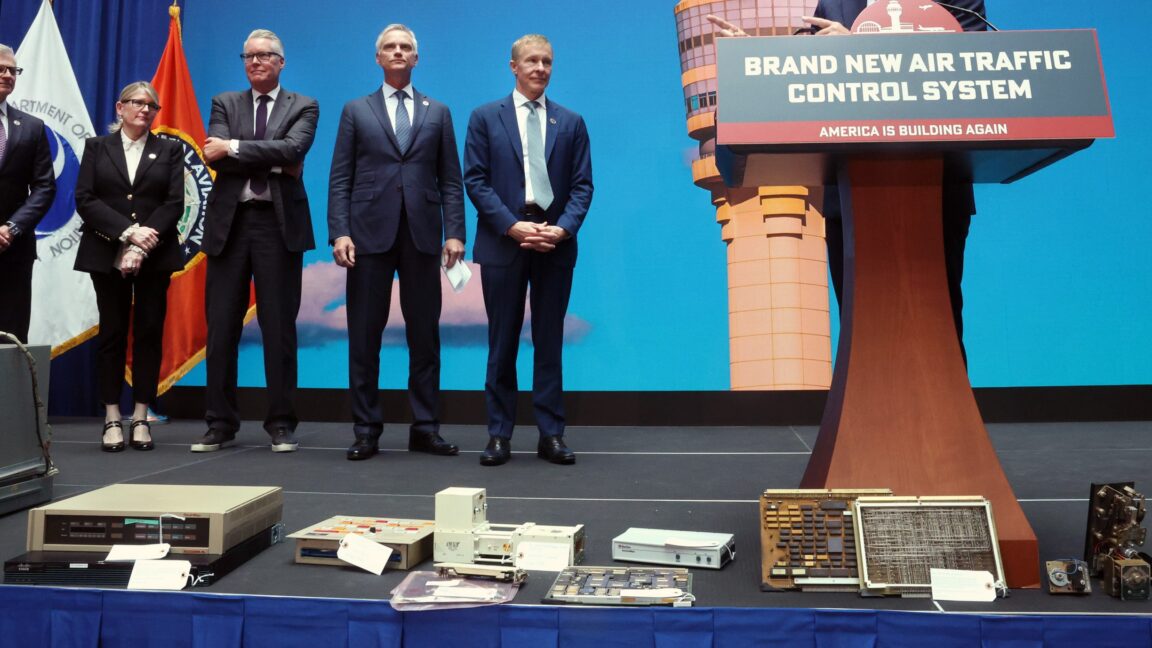
FAA to finally ditch floppy disks in what it calls "historic" tech upgrade

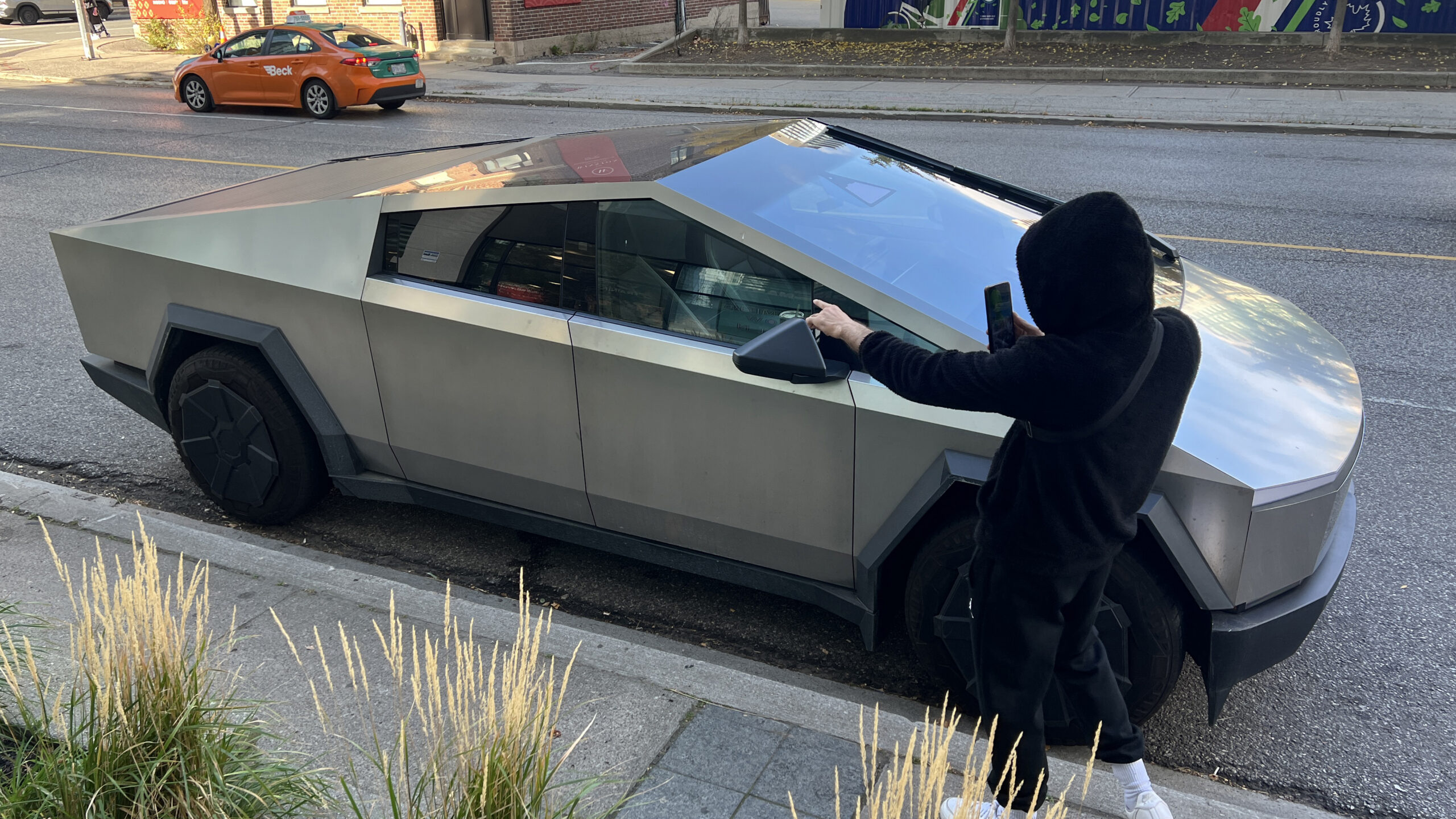
The Cybertruck is dead, makes way for Cybercab says Elon Musk
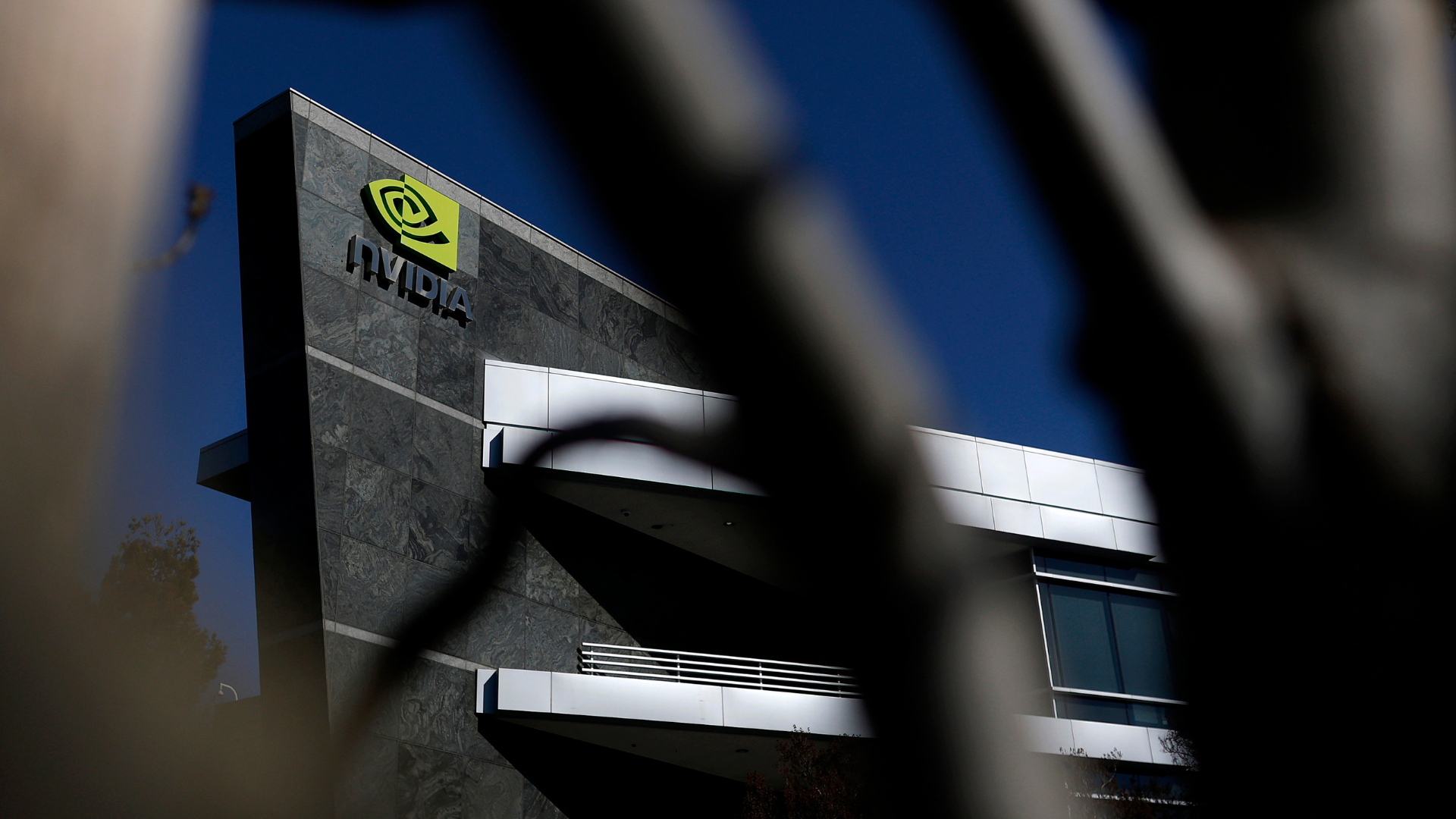
Nvidia wants to repurpose over 130 old telco buildings as tiny data centers, report claims — company in talks with Brightspeed after pitching idea to parent company Apollo Global Management.
Very good boys? The dark, dystopian rise of robot dogs: Pups that carry your shopping are one thing – but what about the mechanical canines being bought up in the US by ICE?

The October inflection point for vibe game development

You should absolutely download your favourite youtube videos

Meet *sshole, the vulnerability that lets hackers SSH into Linux devices

Kids Hooked on AI Chatbots Are Showing Dramatically Worse Mental Health: They're turning to AI chatbots for help, but their machine confidantes are doing more harm than good.

Motorola Signature 27 with GrapheneOS will cost €1.900
